

 By
By A trek to Dudipatsar Lake was on the bucket list for a long time. There were the days when Naran was far greener with open spaces and had a certain rustic beauty which made the bone rattling journey worth it. The sparse infrastructure kept your travels within the vicinity of Naran but there was mention of a Dudipatsar Lake somewhere. Reaching Babusar Pass in those days was risk prone as the narrow track snaked precariously along the mountain edges at places. An Army friend who flew over the region made a mention of the breathtaking Dudipatsar and some other lakes across the Neelum watershed in AJK. One was busy with life and such treks were rarely on the agenda.
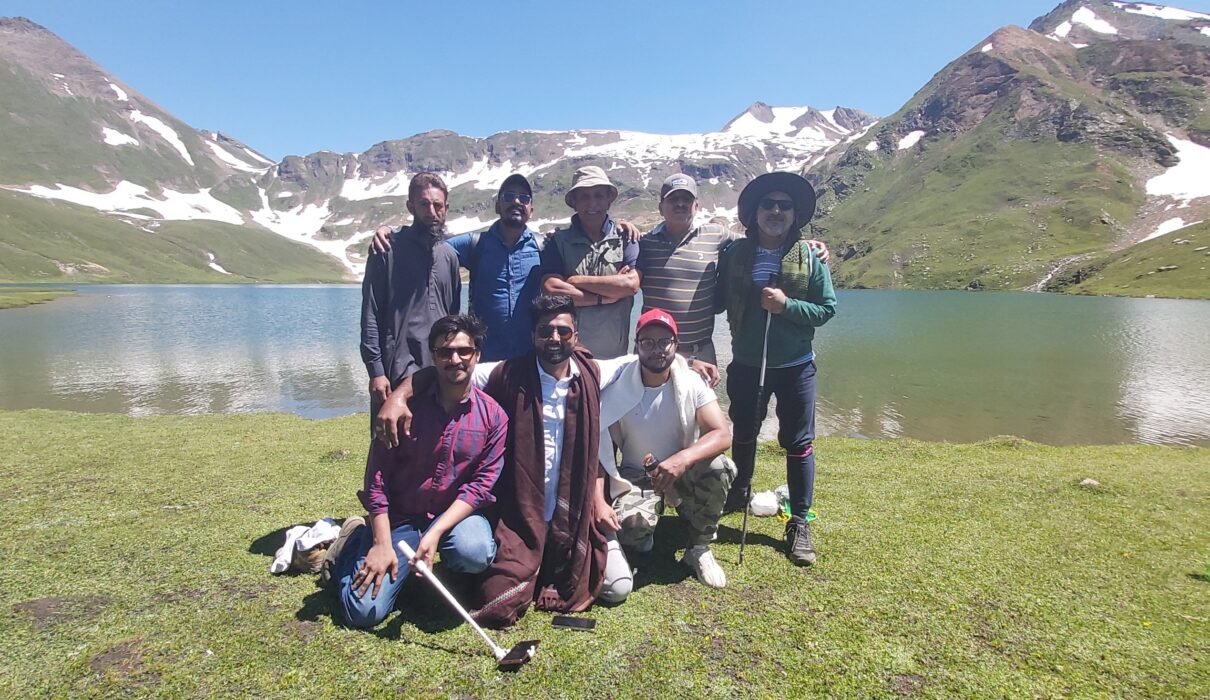
Fast forward. My outdoor pursuits took me to a couple of treks late in 2020 up North in the face of Covid restrictions. I found it interesting to plan and execute them with a group of friends. Starting from Baroghil in Chitral, we went to the famous Herrligkoffer Base along the Rupal face of the Nanga Parbat. It was followed by two stints nearby at Makra peak and Musa ka Musalla in the Kaghan and Siran valleys, respectively. An earlier trek in 2021 took us to Katora Lake in the upper Kumrat Valley. Now planning a trek to the Dudipatsar Lake seemed like a routine affair. Myself, Asad and Imtiaz started very early from Islamabad on 24 July, immediately after Eid-ul-Azha.
Our first surprise was the post-Eid traffic gridlock starting from Balakot and extending beyond Naran.
The traffic volume being far in excess, cars were running out of fuel, and some got stuck along the
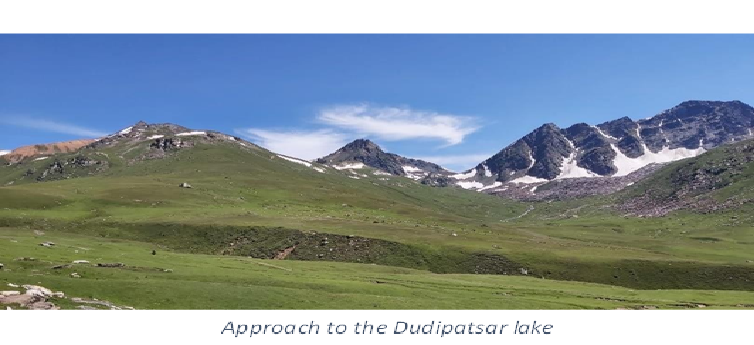
| Approach to the Dudipatsar lake |
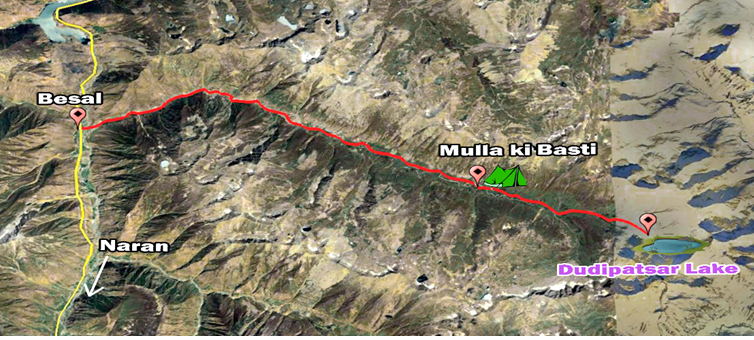
rutted road. We reached Baser at about 10,700 feet the evening, the start point for the trek, and settled in a marginal hotel. We had a good guide, Mr Nadeem (03441424964) who is a PTDC employee. He arranged an equally good porter along with a horse to haul our luggage.
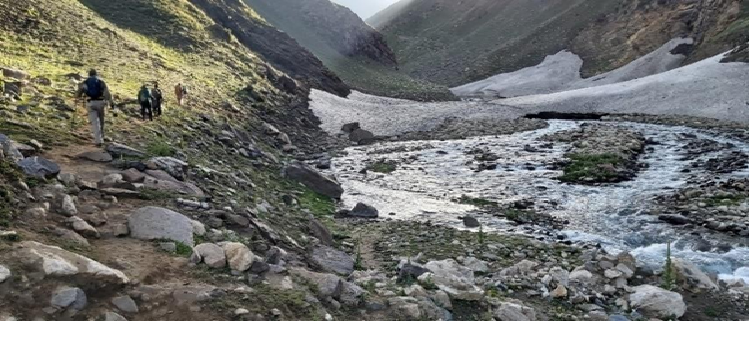
| Trek along mountainsides and glaciers |
Dudipatsar Lake which translates into ‘white lake in the mountains’ sits in the Lalusar-Dudipatsar National Park which is spread over 80,000 hectares. It is created to preserve the pristine eco-system of the region though it faces existential threats due to unchecked commercial tourism. The Park houses the sub-alpine conifer forests and rare herbs, markhor, snow leopard, lynx, and the marmot. It has the Lalusar Lake at about 11200 feet that lies on the route to the Babusar
Pass and of course the Dudipatsar Lake at about 12800 feet with trout. These are linked with a wider ecosystem of alpine lakes, namely the Saiful-Maluk closer to Naran and the Saral Lake in the higher reaches of the Neelum Valley. Some trekkers go to the Saral Lake by traversing the Saral Pass (plus of the Dudipatsar Lake).
An early morning kick-off from Baser saw us being ferried across the Kunhar river in a locally fabricated pulley cart. For nearly three hours we trekked upstream along Poorbi Nar crossing some glaciers and negotiating modest climbs. We came across Afghans who reside in these remote mountains and raise sheep. We also met an Afghan trader who was buying a fresh stock after disposing off his earlier one in Lahore before Eid-ul-Azha.
The narrow Valley opens into grazing meadows fed by water channels. After about 13 kms trek we reached Mullah ki Basti where one camps overnight. We continued onwards towards the Lake along a pristine water channel that runs down the rolling Valley with sheep grazing on a sunny summer day. We reached Dudipatsar Lake after a seven-hour trek from Baser.
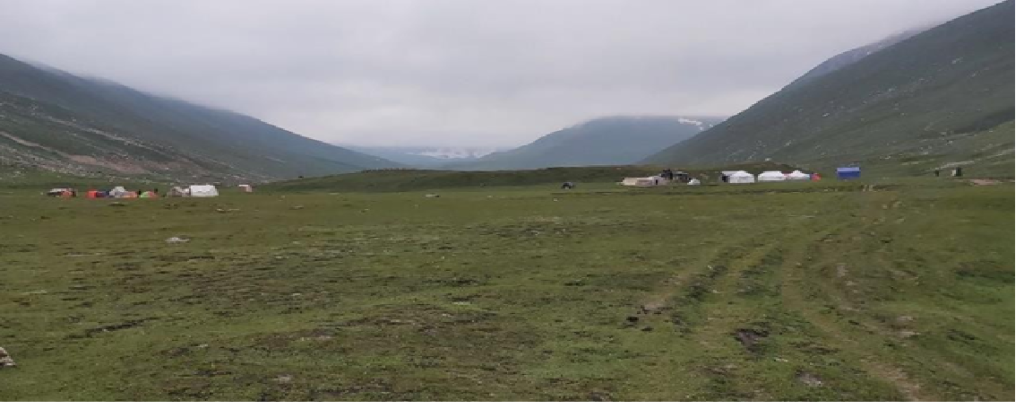
Mullah ki Basti
The Lake sits amidst partially snow-covered mountains towards the end of July. They lie towards its north and west and is open from the direction from where it is approached. It is an eye-catching view with a mountain next to it that allows treks towards the Neelum Valley. We met some animated young trekkers from Lahore and enjoyed a friendly chat, took pictures, and left for Mullah ki Basti for an overnight stay before resuming our return journey early next morning.
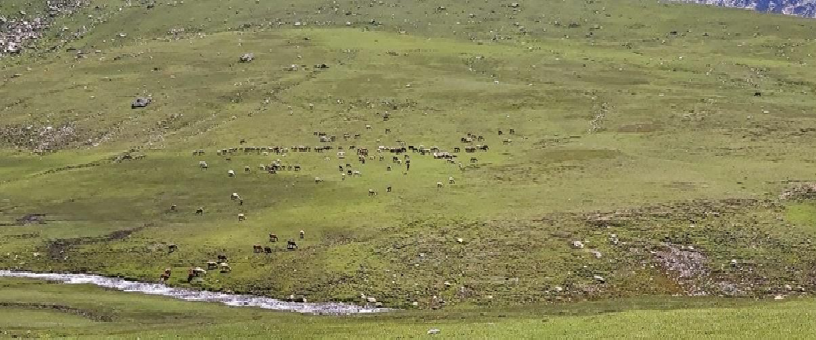
Sheep grazing in the meadows
The sore point in all our treks is the tendency to trash as you go along. We saw garbage all over the camp at Mullah ki Basti. On inquiry the camp management blamed the tourists. Plastics were trashed into the freshwater streams and springs. Such treks must be executed by adhering to the zero-trash rule. We must take individual responsibility to eliminate garbage at the source. Do not carry non-biodegradables and a participatory waste management arrangement should be introduced in the camps.
To conclude this is a trek of moderate degree of difficulty where you gain slightly over 600 meters as you traverse about 18 kilometers. The wider ecosystems of lakes, meadows and mountain routes allow trekkers to choose among number of options linking Baser, Lalusar Lake, Saral and Dudipatsar lakes. The Lalulsar-Dudipatsar National Park and its
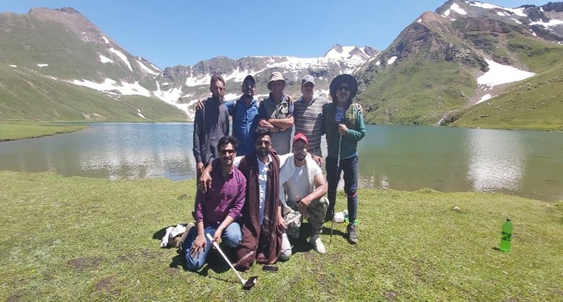
Dudipatsar Lake
environs allow excellent trekking opportunities amid its rich flora and fauna. It certainly emerges as one the premiere trekking venue in the country which can be accessed with ease from Naran or Neelum valleys.
Summary:
| Access | Logistics | Trek | Safety | Cost | Aesthetics |
| Relatively easy | Lodging, food and portering can be facilitated | Moderate difficulty | Dudipatsar Lake to be trekked in daytime. Incidents reported in the area | Approx Rs 10,000 per head for guide, porter and stay at Mullah ki Basti | Aesthetically pleasing |